A photograph is flat. It's a rectangle on a screen or a page, with no real depth and no way to tell the viewer, "Look here first, then here." And yet the best pictures somehow do exactly that — they take you by the hand and walk you through the scene in a particular order. That isn't luck. It's the photographer using lines, frames, and depth to guide your eye on purpose. Once you see how it's done, you can do it too, with any camera at all.
Let me show you three quiet tools that turn a flat rectangle into a path for the eye to follow.
Lines Are Quiet Arrows#
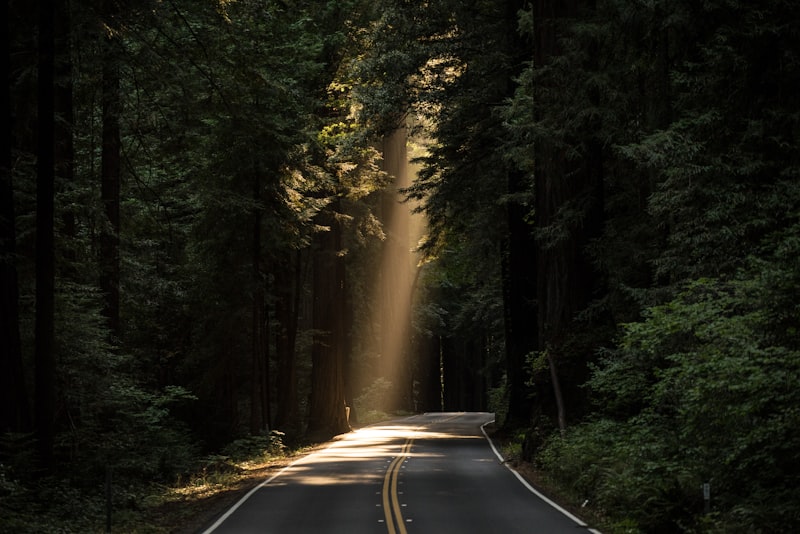
Our eyes can't help following lines. Show someone a road, a fence, a river, or a row of windows, and their gaze slides right along it. This is one of the most dependable things about how we look at pictures, and you can put it to work.
A leading line is simply a line in your scene that points toward your subject or draws the eye deeper into the frame. The world is full of them once you start looking:
- Roads, paths, and sidewalks
- Fences, railings, and rows of trees
- Rivers, shorelines, and cracks in the ground
- The edge of a table, a shaft of light, a shadow
The trick is to position yourself so the line goes somewhere. A road that leads to nothing is just a road. A road that curves toward a lone figure in the distance becomes a story — your eye travels the road and arrives at the person, exactly as you intended.
Try this: find a path or a railing and crouch down low at one end of it, so the line stretches away from you into the distance. Notice how the picture suddenly has pull, as if the ground itself is inviting you to walk in. That pull is the line doing its quiet work.
A line in a photograph is a set of directions. Point it at what matters, and the viewer will follow without ever knowing they were led.
Lines don't have to be straight. A gently curving line — an S-shaped river, a winding trail — leads the eye more slowly and softly, which often feels calmer and more graceful than a hard diagonal. Choose the line's shape to match the mood you want.
Frames Within the Frame#
The second tool borrows something from the picture frames on a wall. You can create a frame inside your photograph using elements in the scene, and it focuses attention beautifully.
Look for things you can shoot through or around: a doorway, a window, an archway, overhanging branches, a gap between two buildings. Position your subject so one of these surrounds it, even partly, and you've built a natural frame.
Framing does two helpful things at once. First, it draws a border around your subject, telling the eye plainly, "the important thing is in here." Second, it adds a sense of depth, because the frame sits closer to the camera than the subject, creating a feeling of near and far.
You don't need a perfect arch. A branch arcing across the top corner, a shadowed wall along one edge, a person glimpsed through a gap — even a partial frame guides the eye inward. The next time you're somewhere with doorways or trees, try placing your subject so something in the foreground wraps around it. The picture gains structure and the subject gains importance, all at once.
Depth: Building in Layers#
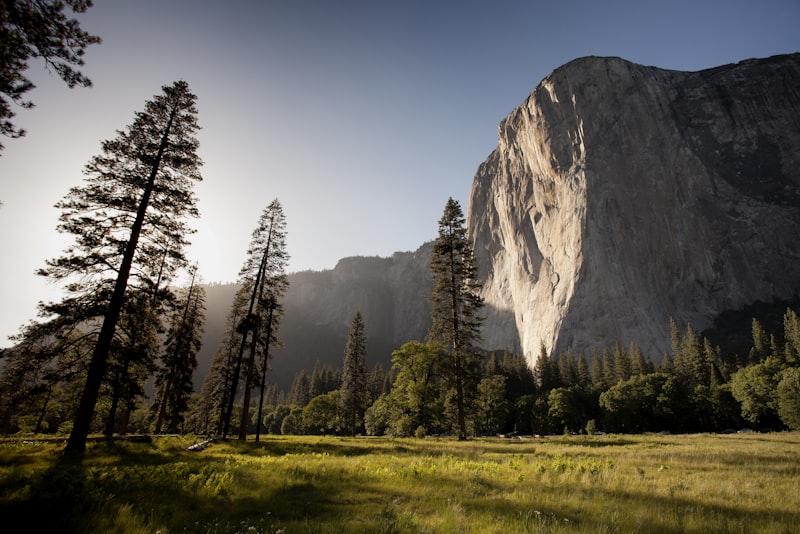
The third tool fights flatness directly. Because a photo has no real depth, you have to suggest it — and the simplest way is to give your picture distinct layers.
Think of a scene as having three zones:
- A foreground, closest to you
- A middle ground, where your subject often lives
- A background, far away
When all three are present, the eye reads the distance between them and the flat rectangle starts to feel deep. A few flowers in the near foreground, a person in the middle, and mountains beyond — the photo breathes with space. Take away the foreground and the same scene flattens out.
A simple way to add depth#
Next time you photograph a wide scene, look down and around for something to put in the foreground: rocks, grass, a fence post, a doorway, the corner of a table. Get a little lower or step so that near object enters the bottom of your frame. You've just added a layer, and with it, a sense of standing in the scene rather than looking at a postcard of it.
Foreground layers often double as leading lines or frames, which is why these three tools work so beautifully together. A foreground railing can lead the eye, frame the subject, and add depth all in a single element.
Putting It Together#
Here's how I want you to think about all of this. Before you press the shutter, ask one question: where do I want the viewer to look first, and where should their eye travel next? That single decision turns you from someone recording a scene into someone composing one.
Then reach for these tools to make it happen. Want the eye pulled to a distant figure? Find a line that leads there. Want a subject to feel special and contained? Frame it with a doorway or a branch. Want the picture to feel like a real, dimensional place? Build it in layers, near to far.
None of this requires special gear. A phone finds leading lines just as well as any camera. What it requires is the habit of looking — of noticing the path the eye wants to take and arranging the frame to honor it.
Start Seeing Lines Everywhere#
The lovely thing about lines, frames, and depth is that once you start noticing them, you can't stop. You'll walk down an ordinary street and see a railing leading toward a doorway, a shadow pointing at a stranger, a branch arching over a bench. The world quietly composes itself, and you simply learn to recognize the moments when it does.
Pick one tool this week. Spend a few days hunting only for leading lines, or only for natural frames. Photograph what you find, then look back and notice where your own eye travels in each picture. You'll start to feel the pull these tools create, and feeling it is how you learn to use it. Anyone can learn to see this way — you just have to start looking, and the frames will open up in front of you.