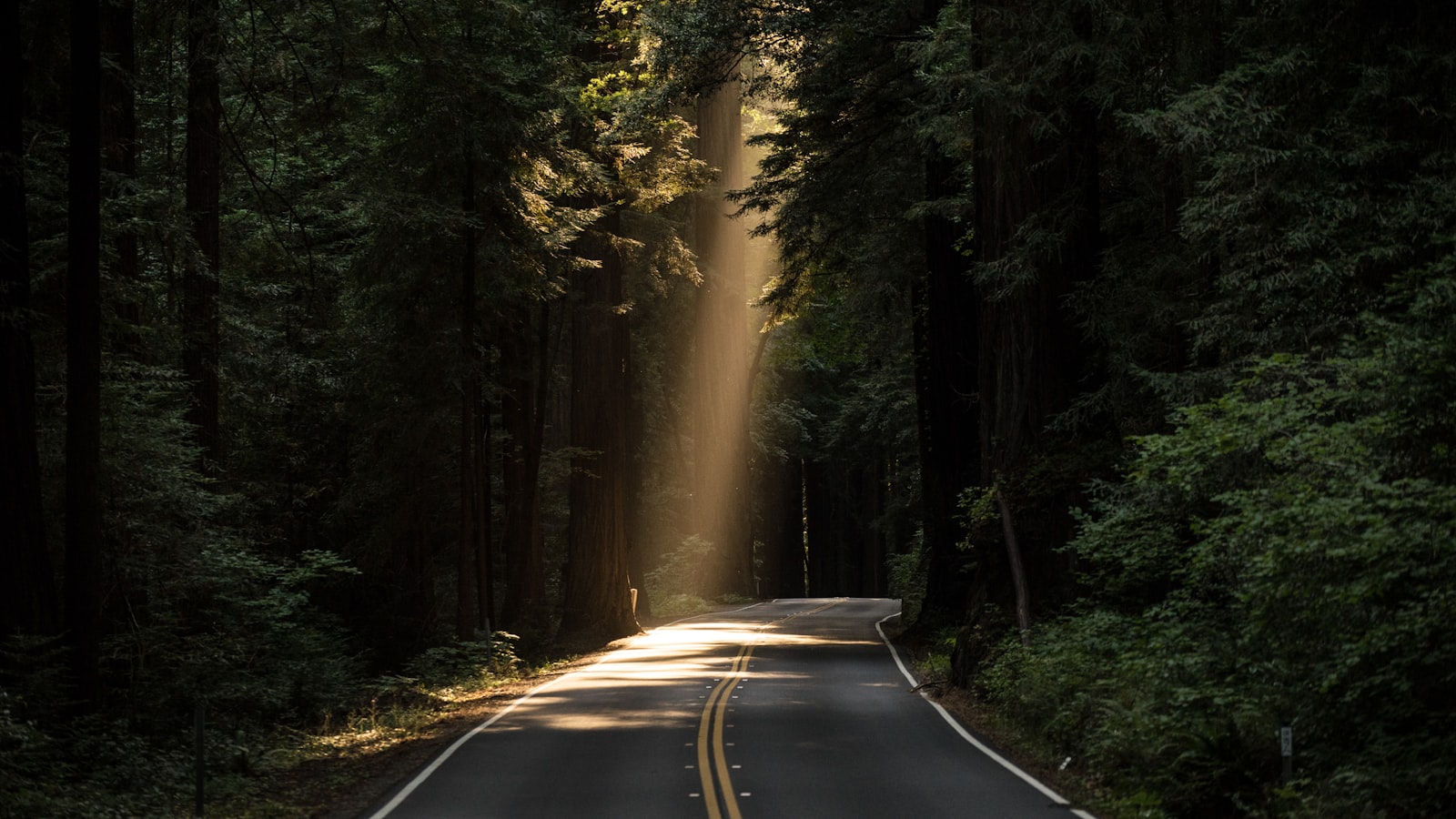
The first time someone told me my photo had "good composition," I had no idea what I'd done. I'd simply moved a little to the left because a lamp was in the way. That small step — moving on purpose — is the whole secret. Composition isn't a gift some people are born with. It's a set of small decisions you can learn to make, one frame at a time.
So let's take the mystery out of it. Composition is the arrangement of everything inside your picture: where the subject sits, what surrounds it, what you keep, and what you let go. You're already doing it every time you raise a camera or phone. The only question is whether you're doing it by accident or on purpose.
Composition Is What You Leave Out#
Most photos that feel cluttered aren't badly exposed or out of focus. They're just too full. There's the person you meant to photograph, and also a bright sign, a parked car, a stranger's elbow, and a trash can — all asking for attention at once. Your eye doesn't know where to rest.
The simplest improvement you can make to almost any photo is to remove distractions before you press the shutter. You don't need editing software for this. You need to take a breath and look at the edges of your frame.
- Move closer, or zoom, so the subject fills more of the space.
- Shift your feet a step in any direction to hide a distracting object.
- Tilt down to lose a busy sky, or up to lose a messy floor.
- Wait a moment for a passing car or person to clear the background.
Think of your frame as a small room you're tidying. You're not adding decoration. You're carrying clutter out the door until only what matters remains. A photo of one teacup on a plain table says more than a photo of an entire crowded shelf.
One Subject, One Idea#
Before you take a picture, try answering a quiet question: what is this a photo of? If you can name it in a few words — "my grandmother's hands," "the light on the stairs," "that red door" — you've found your subject. Everything else in the frame is supporting cast.
This matters because a photograph can really only carry one main idea at a time. When you try to show the whole scene and every interesting thing in it, the picture becomes a list instead of a sentence. Choosing one subject feels like giving something up, and it is. But what you gain is clarity, and clarity is what makes a viewer stop and look.
A photograph with one clear subject gives the eye somewhere to land. A photograph with five subjects gives it nowhere to rest.
This doesn't mean your frame must be empty around the subject. It means everything else should serve the subject — leading toward it, framing it, or simply staying quiet so it can be seen.
Balance: Letting the Frame Settle#
Once you have a clear subject, the next question is where to place it. Beginners often plant everything dead center, and sometimes that's exactly right — centered subjects feel calm, formal, and steady. But often a picture feels more alive when the subject sits a little off to one side.
The word for the feeling we're after is balance. Imagine your frame is a set of scales. A small dark object can balance a large pale area. A person on the right can be balanced by an open window on the left. You're not measuring anything; you're just sensing whether the picture feels settled or whether it feels like it's tipping over.
A simple way to feel it#
Take a photo, then look at it and ask: does my eye keep sliding off one edge? If so, the frame is probably unbalanced. Try giving the subject a little space to "look into" — if a person faces right, leave more room on the right side of the frame. The picture stops feeling crowded against the edge and starts to breathe.
You won't always get this right, and that's fine. Balance is felt, not calculated, and the feeling grows sharper every time you practice noticing it.
Guiding Where the Eye Goes#
Here's the part that turns a tidy photo into a good one: you get to decide what a viewer sees first. Our eyes are pulled toward certain things almost automatically, and once you know what they are, you can use them gently.
The eye tends to go to:
- The brightest part of the frame.
- Areas of strong contrast, where light meets dark.
- Faces, and especially eyes.
- Sharp detail in an otherwise soft scene.
- Lines that point somewhere.
So if the brightest spot in your picture is a window in the corner, that's where the eye goes — even if your subject is standing in shadow nearby. Knowing this, you can adjust. Maybe you move so the subject is the brightest thing. Maybe you let that bright window become part of the story instead of fighting it. Either way, you're making a choice rather than leaving it to chance.
This is the quiet power behind all composition. Simplify so there's less to compete. Balance so the frame feels settled. Then guide the eye to the one thing you most want it to find.
Start Small, Look Often#
You don't need new gear to practice any of this. A phone is plenty. Pick one idea from this article — say, leaving things out — and spend a week noticing the edges of your frames. Take a picture, then take a step and take it again. Compare them later. You'll start to see why one feels clearer than the other, and that seeing is the real skill.
Composition will never be a formula you solve once. It's a way of paying attention. The photographers whose work you admire aren't using secret rules; they're just looking a little longer before they press the shutter, asking what belongs and what doesn't. Anyone can learn to do that. You already started the moment you wondered why one photo works and another doesn't. Keep wondering, keep moving your feet, and the frames will follow.