You picked up a camera, or maybe just a phone, and something stirred. A slant of afternoon light on a kitchen wall. A stranger's face in a crowd. You wanted to keep it. That impulse is the whole of photography, and you already have it.
What follows is not a manual. It is a way to begin gently, without buying anything, without memorizing a single chart. I have made pictures for twenty years, and the advice I would give a beginner today is almost the opposite of what I once believed mattered.
The Camera You Have Is the Right One#
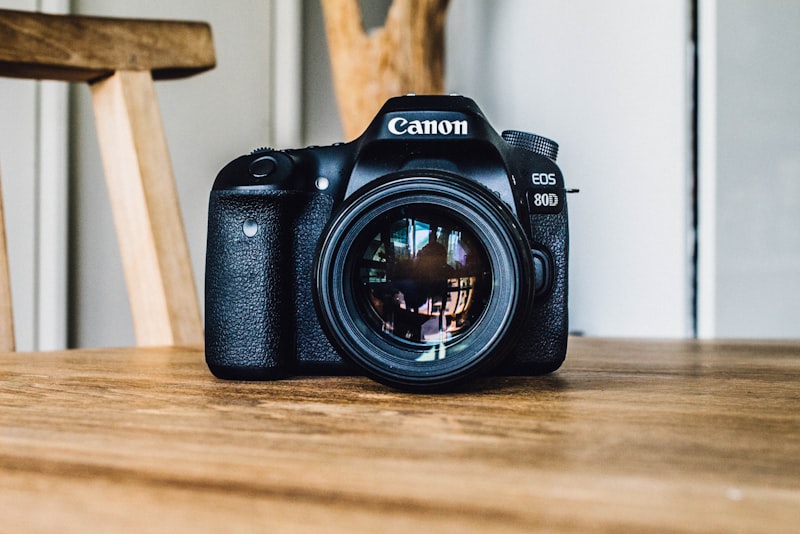
When people ask me what camera to buy first, I usually say: the one in your pocket. A modern phone, a hand-me-down DSLR, a cheap point-and-shoot from a thrift shop. Each of these has made photographs that hang in galleries. None of them will hold you back for years.
It is tempting to believe that a better camera will make better pictures. It rarely works that way. A new body will record a dull scene in higher resolution, and you will simply have a sharper dull picture. The interesting work happens before the shutter ever clicks, in the choice of where to stand and what to wait for.
A camera is a tool for paying attention. The attention is the part that's yours.
So begin with what you own. Learn its quirks the way you'd learn a borrowed kitchen, by cooking in it. When you eventually outgrow it, you will know exactly what you want next, because your own pictures will have told you.
Learn to See First#
Here is the heart of it. Photography is less about operating a machine and more about noticing. Before you worry about settings, spend a week simply looking.
Notice how light changes through the day. Morning light comes in low and golden and forgiving. Midday light falls straight down and turns harsh, carving deep shadows under eyes and chins. Evening softens everything again. None of this is good or bad, but each kind of light suits different subjects, and once you start seeing it you cannot stop.
Notice how things are arranged in your frame, too. A photograph is a rectangle you draw around the world. Move a step left and a distracting pole disappears behind a tree. Crouch a little and a cluttered background drops away into sky. These small movements are free, and they do more for a picture than any expensive lens.
A Simple Seeing Exercise#
Pick one ordinary object in your home, a mug, a chair, a plant. Photograph it ten different ways without leaving the room. Up close, from above, in window light, in shadow, with the background near, with it far. Look at the ten frames together. You will learn more from that hour than from a week of reading.
Shoot a Lot, and Look Honestly#
There is no shortcut around volume. The photographers whose work you admire have piles of frames you will never see, most of them ordinary. They kept shooting anyway, and slowly the good ones came more often.
So make a habit of carrying your camera and using it. Photograph things that don't seem important. Quantity, in the beginning, teaches you more than any single careful masterpiece, because it gives you many small experiments to learn from.
Then comes the harder half: looking at your own pictures without flinching. When a frame works, ask yourself why. Was it the light? The moment? The simple background? When a frame falls flat, ask the same question. Over time these quiet conversations with your own work become your real teacher.
A few gentle habits that help:
- Keep your strongest few frames from each outing and let the rest go.
- Return to old pictures after a month; you'll see them more clearly with distance.
- Resist the urge to fix everything in editing. Get more right in the camera instead.
The Few Basics That Actually Matter#
You will eventually want a little more control than full auto gives. When that day comes, three settings do almost all the work, and they're worth understanding as a group rather than in isolation.
Aperture controls how much of your scene is in sharp focus, and it shapes the soft, blurred backgrounds you may already admire. Shutter speed decides whether motion is frozen crisp or smeared into a sense of movement. ISO governs how sensitive your camera is to light, which becomes your friend when the room goes dim.
These three are the whole game, and they balance against each other like a small seesaw. You don't need to master them this week. When you're ready, read understanding aperture on its own, then meet the others, and finally see how they cooperate in the exposure triangle. Take them one at a time. There is no rush, and trying to swallow all three at once is the surest way to feel lost.
For now, leaving your camera in an automatic or semi-automatic mode is perfectly honorable. Plenty of working photographers do, in fast situations, every day. The goal is not to prove you can drive manually; it's to make pictures you care about.
Let It Stay Joyful#
The quickest way to quit photography is to turn it into homework. Charts, forums, endless gear comparisons, the nagging sense that you're behind. Set all of that down.
Your only real assignment is to keep noticing the world and pointing your camera at the parts that move you. The technical understanding will accumulate naturally, in the order you actually need it, drawn forward by curiosity rather than duty.
Twenty years in, the thing I love most is still the same thing I loved at the start: the moment when the light is exactly right and you happen to be there, ready, looking. You don't need much to chase that. You only need to begin, and to keep your eyes open. So go make a few pictures today. Then make a few more tomorrow. That, quietly and without drama, is how a photographer is made.